I get this question more than any other right now. “Is GEO the new SEO? Should I stop doing SEO? Do I need different people for the GEO work?”
The short answer is no, no, and maybe. But the long answer is more useful, because the way most people are thinking about this is going to cost them traffic.
GEO and SEO overlap by about sixty percent. That’s the good news — most of what you’ve been doing still works. The bad news is the forty percent that’s different is exactly where most agencies and most in-house SEO people are still asleep. You can do excellent SEO in 2026 and still lose to a worse-optimized site that handles the GEO layer correctly.
This guide walks through what actually changed, what didn’t, where SEO professionals are getting GEO wrong, and what a realistic transition plan looks like. Roughly 3,000 words. Read it once, then audit your own work against it.
If you want the full background on what generative engine optimization is and how AI engines decide who to cite, I covered that in the complete 2026 GEO guide — that’s the pillar this article supports.
The Short Answer: GEO Doesn’t Replace SEO
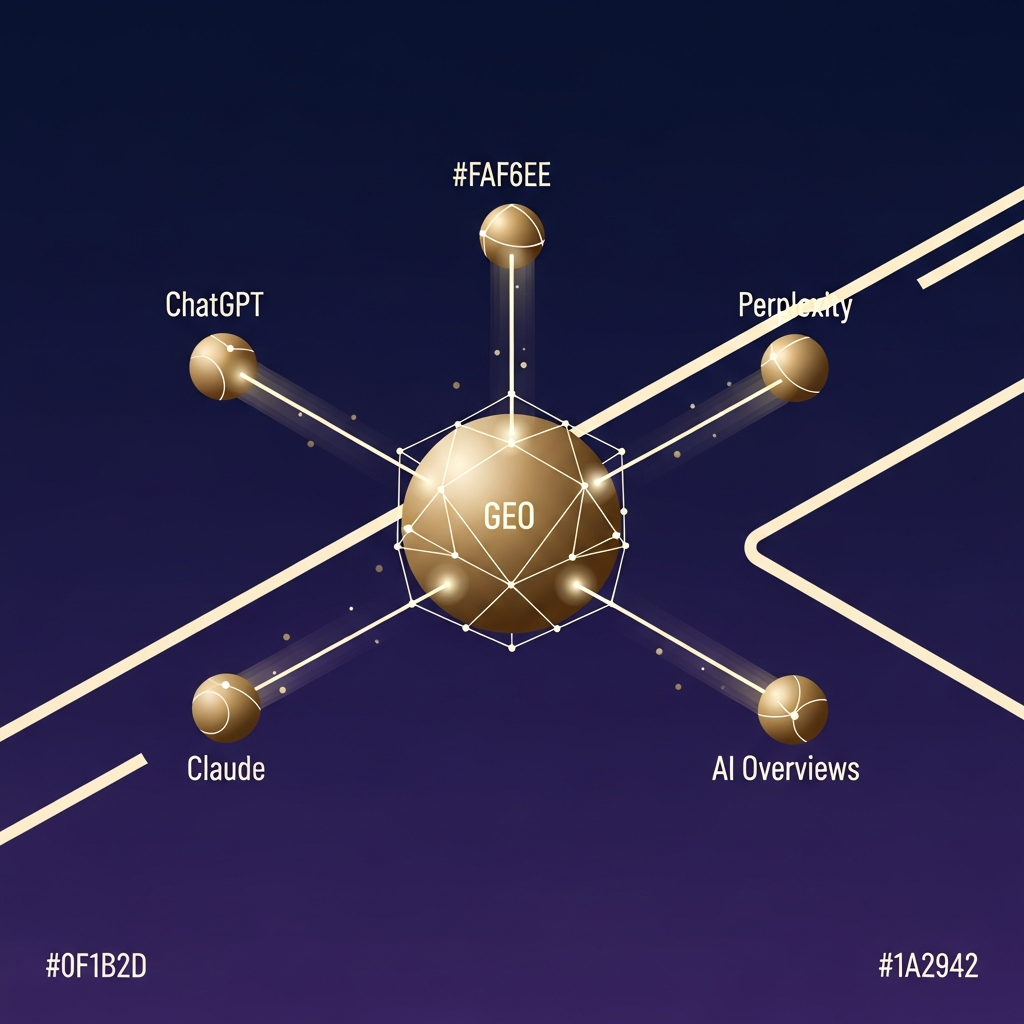
Generative engine optimization is a layer that runs on top of search engine optimization, not a replacement for it. SEO ranks your URL in blue-link results so humans click through to your site. GEO gets your content cited inside AI-generated answers so users see your name even when they don’t click. Most sites need both. Abandoning SEO to chase GEO is the most common mistake I see right now — and it’s an expensive one.
If you’re already doing real SEO, you’re sixty percent of the way to good GEO. The work splits roughly like this:
- 60% of GEO is just SEO done well — keyword research, on-page optimization, internal linking, technical health
- 25% is SEO that used to be optional but is now mandatory — complete schema, named author markup, FAQ structure
- 15% is genuinely new work that didn’t exist three years ago — entity recognition, AI citation tracking, speakable markup, GEO-specific testing
That breakdown matters because it tells you where to spend your time. If your SEO foundation is weak, fixing that gets you the first 60%. Trying to skip the SEO basics and dive straight into GEO-specific tactics is like trying to optimize Page 5 of Google results — you’re tuning the wrong thing.
What Stayed the Same
Here’s the work that still matters exactly as much as it did in 2022:
Keyword research. AI engines need to understand what users are actually searching for, and that hasn’t changed. Tools like DataForSEO, Ahrefs, and Semrush still tell you which terms have demand and which don’t. Search intent still maps to content type. Long-tail keywords still convert better than head terms for most niches.
On-page basics. Title tags, meta descriptions, H1 hierarchy, keyword placement, URL structure, image alt text. All of this still gets parsed by AI engines exactly the same way Google parses it. If you’ve been doing on-page SEO well, you’ve been doing on-page GEO well without realizing it.
Internal linking. AI engines crawl your site the same way Googlebot does. They follow internal links. They use anchor text to understand topical relationships. Sites with strong internal linking architecture (pillar pages with supporting clusters, like the structure this article belongs to) get cited more in AI search than sites with isolated pages — because the AI can see the topical depth signal more clearly.
Site speed and Core Web Vitals. Slow sites still rank worse. Slow sites also get crawled less frequently by AI engines, which means your content updates take longer to register in citation patterns. The same speed work you’ve been doing for Google rewards you twice now.
Crawlability. Robots.txt, sitemap.xml, canonical tags, redirect chains. None of this changed. If your site has crawl problems, fix them first — neither Google nor any AI engine can cite content they can’t reach.
Backlinks. Less critical than they were five years ago, but still meaningful. AI engines use link signals as part of how they decide source authority. A site with no inbound links from credible sources will lose to a site with even modest authority links, all else being equal.
The pattern: if it worked for Google search in 2023, it almost certainly still works in 2026. The fundamentals didn’t change. What changed is what got added on top.
What’s Different — The 40% That Matters
Here’s where the work split. These are the dimensions where GEO requires you to do things SEO didn’t, or to do them more rigorously than SEO required.
Schema markup moved from optional to mandatory. In 2023, you could have a perfectly ranking page with minimal schema. In 2026, AI engines parse structured data before they read prose, and pages with incomplete schema get bypassed for citations even when they rank well. The schema types that matter most: Article (with full author + publisher), FAQPage (massive citation booster for AI Overviews), HowTo (for step-by-step content), BreadcrumbList (for every non-homepage URL), and Person schema with hasCredential, knowsAbout, and sameAs arrays.
Author identity became a citation gate. The shift here is significant. Pages with anonymous bylines or “Admin” attributions used to lose a few percent of ranking weight. In 2026, they lose almost all AI citation eligibility. ChatGPT, Claude, and Google AI Overviews all weight author identity heavily — they want to know who’s making the claim. A page authored by a named expert with a real bio and verifiable credentials beats an identically-written anonymous page by a wide margin for citation purposes.
Topical depth weighs more than individual page quality. Old SEO rewarded the single excellent page. GEO rewards the site that demonstrates comprehensive knowledge across an entire subject area. A site with thirty interconnected articles on one topic outranks a site with one excellent article on the same topic for AI citation purposes — because the AI infers expertise from the depth and breadth of coverage. This is why pillar-and-cluster architecture matters so much more now than it did when it was just an SEO best practice.
Recency weighs heavier than it used to. AI engines, especially Perplexity, will cite a recent article over an older authoritative one for time-sensitive topics. The “publish and forget” approach that worked for evergreen content five years ago is now a slow decay curve. Sites that update their content quarterly hold citations longer than sites that publish once and never return.
Citation rate became a real success metric. Traditional SEO measured success in rankings and clicks. GEO adds a third metric: how often does your site get cited in AI-generated answers? You can’t track this in Google Search Console (yet). You measure it manually by running queries across the four AI engines monthly and noting where you appear. The brands that win GEO over the next two years are the ones treating citation share like market share.
Side-by-Side Comparison
The table version, for the people who skim:
| Dimension | Traditional SEO | Generative Engine Optimization |
|---|---|---|
| Primary goal | Rank URL high in blue-link results | Be cited as source in AI-generated answers |
| Success surface | SERP (search results page) | AI answer box (Overviews, ChatGPT, Perplexity, Claude) |
| Success metric | Rankings, clicks, organic sessions | Citation rate + rankings + referrals from AI engines |
| Schema status | Helpful, often optional | Mandatory and complete (Article, FAQ, HowTo, BreadcrumbList, Person) |
| Author signal | Useful for E-E-A-T but secondary | Critical citation gate — named bylines required |
| Content depth | Long articles ranked better | Topical breadth across cluster ranked better |
| Refresh cadence | Annual or less | Quarterly minimum, monthly for competitive topics |
| Backlink weight | Heavy | Moderate (still matters, but less than before) |
| Speed of results | 3-6 months for ranking | 2-6 weeks for schema-layer effects, 3-9 months for content-depth effects |
| Failure mode | Page exists but doesn’t rank | Page ranks but doesn’t get cited |
| Tooling | Ahrefs, Semrush, GSC | Above + AI citation trackers (Profound, Otterly) + manual query testing |
Where SEO Professionals Get GEO Wrong
This part might sting. I’ve watched experienced SEO people make these mistakes repeatedly over the last eighteen months, including some folks who should know better.
Mistake 1: Treating GEO like “SEO 2.0” and trying to replace their whole strategy. The people doing this either abandon SEO fundamentals (and lose Google rankings without gaining AI citations) or chase every new tactic that hits Twitter (and never build sustained authority on anything). GEO is additive. You don’t restart from zero. You upgrade.
Mistake 2: Skipping schema because “it’s just a few signals.” This is the cheapest, fastest GEO win available, and a shocking number of professionally-run sites still have incomplete schema. I audited a site last month for a respected SEO consultancy — their own blog had no FAQPage schema, no HowTo schema, and Person schema without any of the optional-but-important fields. They were writing about AI search optimization on a site that wasn’t itself optimized for AI search. Don’t be that. Fix your own schema before you take a client’s money.
Mistake 3: Chasing every new acronym. GEO, AEO, AIO, LLM SEO, AI SEO, semantic SEO, entity SEO. There’s a new term every six weeks. Most of them describe the same body of work with slightly different emphasis. Pick the term you’ll use (I use GEO), document your approach, stop trying to rebrand. I wrote a whole separate piece on the AEO vs GEO acronym debate if you want to settle the vocabulary question once.
Mistake 4: Building for ChatGPT specifically. I see content marketers writing “ChatGPT-optimized articles” that ignore Perplexity, Claude, and Google AI Overviews. The signals correlate strongly across the four engines — a page well-optimized for one usually performs decently across all of them. Building for one specific engine is a fast way to lose visibility on the other three.
Mistake 5: Ignoring the audit step. Most sites don’t actually know what their current GEO status is. They start implementing changes based on what they read in articles, without first measuring where they stand. You can’t fix what you haven’t diagnosed. This is where a structured audit — even a quick self-audit using the SEE Framework — pays off faster than diving straight into tactics.
The Skill Stack Shift
The skills that pay in GEO aren’t fundamentally different from the skills that paid in SEO. They’ve just been re-ordered.
Skills that still matter as much as ever:
- Keyword research and search intent analysis
- On-page optimization (titles, meta, H-tags, content structure)
- Technical SEO (crawlability, speed, indexing)
- Content strategy and editorial calendar management
- Analytics and measurement
Skills that became more important:
- Schema markup implementation (not just generation, but ongoing maintenance)
- Entity-focused content architecture (pillar-and-cluster done deliberately)
- Author-identity management across multiple platforms (sameAs, social profile claiming)
- Editorial expertise (real subject-matter knowledge becomes a citation gate)
- Cross-engine testing (manually checking citations across ChatGPT, Perplexity, Claude, AI Overviews)
Skills that became less important:
- Link building at scale (still useful, but cheaper signals like schema produce faster ROI now)
- Exact-match keyword optimization (AI engines understand intent more flexibly)
- Generic content production (anonymous “10 best X” articles get bypassed for citations)
The implication for hiring or self-development: the person who wins GEO over the next three years is a writer with technical chops, not a technician with writing chops. The content-quality signal got loud enough that you can’t optimize your way around weak content anymore.
How to Audit Your Current SEO Work for GEO Gaps
A practical checklist you can run on your own site this week. Each item takes five to ten minutes.
1. Does every published page have complete Article schema? Open Google’s Rich Results Test. Paste your three most important page URLs. Check the Article schema block. Look for missing author, datePublished, dateModified, publisher, and image fields. Pages with incomplete Article schema lose citation eligibility immediately.
2. Is your author identity claimed across the web? Search your name in Google. Do the results include your About page, your LinkedIn, your book or publications, and your social profiles all consistently? If your author identity is scattered or incomplete, AI engines can’t associate your expertise with your content reliably.
3. Do your FAQ-style sections have FAQPage schema? This is the single biggest AI Overview citation booster. If you have an FAQ section that’s visible HTML on the page but doesn’t have corresponding FAQPage schema in the JSON-LD, you’re leaving citations on the table.
4. When was your most-trafficked page last updated? Open your top page by traffic. Look at the visible “last updated” date. If it’s more than six months old, your citation share is decaying whether you can see it or not. Refresh date alone helps marginally — refresh date plus substantive updates helps significantly.
5. Are you cited in any AI engine right now for your target keywords? Open ChatGPT, Perplexity, Claude, and Google. Search a query you’d expect your site to rank for. Note who gets cited. If it’s not you, note who it is and what their content looks like.
If any of those five points came back negative, that’s where you start. The schema layer (items 1, 3) is the fastest fix — typically a 30-60 minute job that produces measurable citation effects within two to six weeks. The author layer (item 2) takes longer but compounds across every page you publish.
If you’d rather have someone run a structured version of this audit on your site with the actual code and text to add, that’s the $49 AI Search Audit I run. It applies the full SEE Framework, gives you a written report ranked by impact, and includes the exact schema snippets to drop into your site.
A Realistic 90-Day GEO Transition Plan
This is the plan I’d give to an SEO professional or in-house team transitioning their existing process to include GEO without abandoning what already works. Three phases, thirty days each.
Days 1-30: Schema layer. Inventory the current schema on your top twenty pages by traffic. Identify gaps. Implement complete Article, Person, Organization, FAQPage, HowTo, and BreadcrumbList schema where missing. Validate every fix in Google’s Rich Results Test before moving on. By end of month one, every important page on your site should pass schema validation with zero errors and zero warnings.
Days 31-60: Entity layer. Build out a clear About page that establishes you (or your business) as a named entity with knowsAbout fields populated for your three to seven core topics. Link the About page from every relevant content page using consistent anchor text. Claim and link social profiles via sameAs in Person schema. Update author bios across the site to include credentials and the same external links consistently. By end of month two, an AI engine looking up your name should find a coherent entity profile rather than scattered fragments.
Days 61-90: Content depth. Identify your three to five core topics. For each topic, audit your existing content — do you have a pillar page plus eight to twelve supporting articles, all internally linked? If not, plan the content gaps and start writing. This is the highest-leverage GEO work because topical depth signals are the hardest for competitors to replicate quickly. By end of month three, you should have at least one fully built-out cluster — exactly the structure this article and its sibling pieces represent.
Through all three phases, run a monthly query test across the four AI engines for your target keywords. Track which queries you appear in, which you don’t, and where your competitors show up. This is the closest thing to a citation rate metric you can build right now, and it tells you whether the work is moving the needle.
For a more detailed breakdown of the framework that powers each phase — Schema, Entity, Expertise — read the SEE Framework section of the pillar guide. That’s the doctrine. This article is the application.
Where to Go From Here
If you’ve read this far, you understand the landscape better than ninety percent of working SEO professionals right now. That’s not a flex — it’s a window. Sites that build GEO discipline now compound that advantage over the next two to three years before the broader industry catches up.
Three suggested next reads, depending on what you need:
- The Complete 2026 Guide to Generative Engine Optimization — the pillar this article supports. Covers the SEE Framework, how each engine handles citations differently, and what gets cited vs what doesn’t.
- AEO vs GEO: Which Acronym Actually Matters? — if the terminology debates are wearing you down. Settles the vocabulary question once.
- Best AI SEO Tools in 2026: An Honest Review — the current tool landscape, what each tool does and doesn’t do, where the gaps are.
If you want me to audit your site against the SEE Framework with specific recommendations and the actual schema code to add, that’s the AI Search Audit — $49, written report delivered within a week.
Frequently Asked Questions
Is GEO going to replace SEO?
No. GEO is a layer that runs on top of SEO, not a replacement for it. Sixty percent of the work overlaps — keyword research, on-page optimization, internal linking, technical health all still matter. What’s different is the addition of new signal categories (schema completeness, entity recognition, expertise signals, topical depth) that didn’t matter as much in the blue-link era. Sites that abandon SEO to chase GEO lose on both fronts.
Should I stop doing traditional SEO?
Definitely not. Most of what’s working in SEO right now is also working for GEO. The fundamentals — keyword research, on-page optimization, internal linking, site speed, crawlability — still matter exactly as much as they did. What you need to do is add GEO-specific work on top of your existing SEO process, not replace it.
Do I need different tools for GEO?
Mostly the same tools, with some additions. Your existing keyword research tools (Ahrefs, Semrush, DataForSEO) still work. Google Search Console still works. What you’d add for GEO specifically: an AI citation tracker like Profound or Otterly, plus manual query testing across ChatGPT, Perplexity, Claude, and Google AI Overviews. Most of the GEO-specific tools are monitoring tools, not new optimization tools.
Is GEO harder than SEO?
Not really. It’s a different distribution of effort. The technical work (schema, structured data) is straightforward once you’ve done it once. The content work (genuine expertise, named author identity, topical depth) is harder to fake than traditional SEO content was — but that’s because the standard moved up, not because the work itself is more complex.
Will my old content still rank under GEO?
Some of it. Old content with strong fundamentals (real expertise, solid structure, good internal links) carries over fine. Old content that was thin, anonymous, or generic loses visibility faster than it used to. The middle band of “okay but not great” content is the most vulnerable — it ranked for some queries under the old system but won’t earn citations under the new one.
How long until I see GEO results?
Schema-layer fixes show up in AI citation patterns within two to six weeks. Entity layer work takes one to three months. Topical depth — the highest-leverage layer — takes three to nine months to compound. Sites that implement GEO consistently for twelve months see citation rates grow predictably across all four major engines.
Can I do GEO myself, or do I need an agency?
Most schema and entity work is well within reach for a technically capable site owner. The hardest part is auditing your current state objectively — most owners can’t see their own gaps. A one-time audit from someone outside your site is usually more valuable than an ongoing agency relationship, especially in the first year.

Bryan Collins runs CRST Web and bryancollinsonline.com. He's worked in digital infrastructure for thirty years and is the author of "Why Your Website Isn't Ringing: The Send Click Convert System for Local Businesses" (Amazon, 2025). He builds GEO-optimized authority sites using Astro and Tailwind CSS, delivers AI Search Audits for small and mid-sized businesses, and runs the Tradesman Stack SaaS at newtradeleads.com — all built on the GEO principles described in this guide.
Last updated: May 23, 2026. This page is refreshed quarterly as AI engine behavior evolves.